OpenAI started showing ads inside ChatGPT in 2026 — and it's not just free users affected. Here's exactly who sees them, how targeting works, and your ad-free alternatives.
ChatGPT Now Has Ads — Even If You're Paying for It
ChatGPT ads are no longer a rumor: OpenAI began testing them on February 9, 2026, and the surprising part is that they do not only affect free users. If you are on the $8/month Go plan, you are seeing them too, despite paying for the service. This guide explains who sees ads, how they are targeted, what you can switch off, and which assistants have none.
Update (November 2026): What ChatGPT's Pricing Page Says Now
ChatGPT's own pricing page currently says only that the Go plan "may include ads". It does not mention ads for Free, Plus or Pro, and it no longer shows dollar prices for the paid plans in our automated check, so the figures below are from earlier reporting. Rules differ by country and change often, so check what you see in your own account.
What Actually Changed
OpenAI confirmed it is testing advertisements inside ChatGPT conversations for users in the United States. The rollout started as a phased test, not an instant switch for everyone, and OpenAI said it would expand gradually based on feedback and real-world results.
Who sees ads
- Free plan users: the standard, no-cost version of ChatGPT
- Go plan users: the $8/month budget subscription, positioned between Free and Plus
Who doesn't see ads
- Plus ($20/month)
- Pro (from $100 to $200/month)
- Business, Enterprise, and Education accounts
So the Go plan, despite being a paid subscription, still shows ads. The ad-free experience only starts at Plus and above.
| Plan | Price | Ads (US) | Can you turn them off? |
|---|---|---|---|
| Free | $0 | Yes | Personalization can be turned off; ads can be dismissed |
| Go | About $8/month | Yes | No ad-free option |
| Plus | $20/month | No | Not needed |
| Pro, Business, Enterprise | $100 and up | No | Not needed |
How the Targeting Works
Ads are matched to the topic of your current conversation rather than built from a long-term behavioral profile the way traditional social media advertising works. OpenAI has said it may also personalize ads using signals like your location and language, and that personalization can be toggled off, though opting out of personalization may come with fewer free daily messages or tighter usage limits.
Some guardrails apply. Ads are not shown to users under 18, and OpenAI's systems attempt to detect and exclude accounts it predicts belong to minors, even if age was not explicitly provided. Ads are also reported to stay away from sensitive conversations, such as health, mental state, and current politics.
What the Ads Actually Look Like
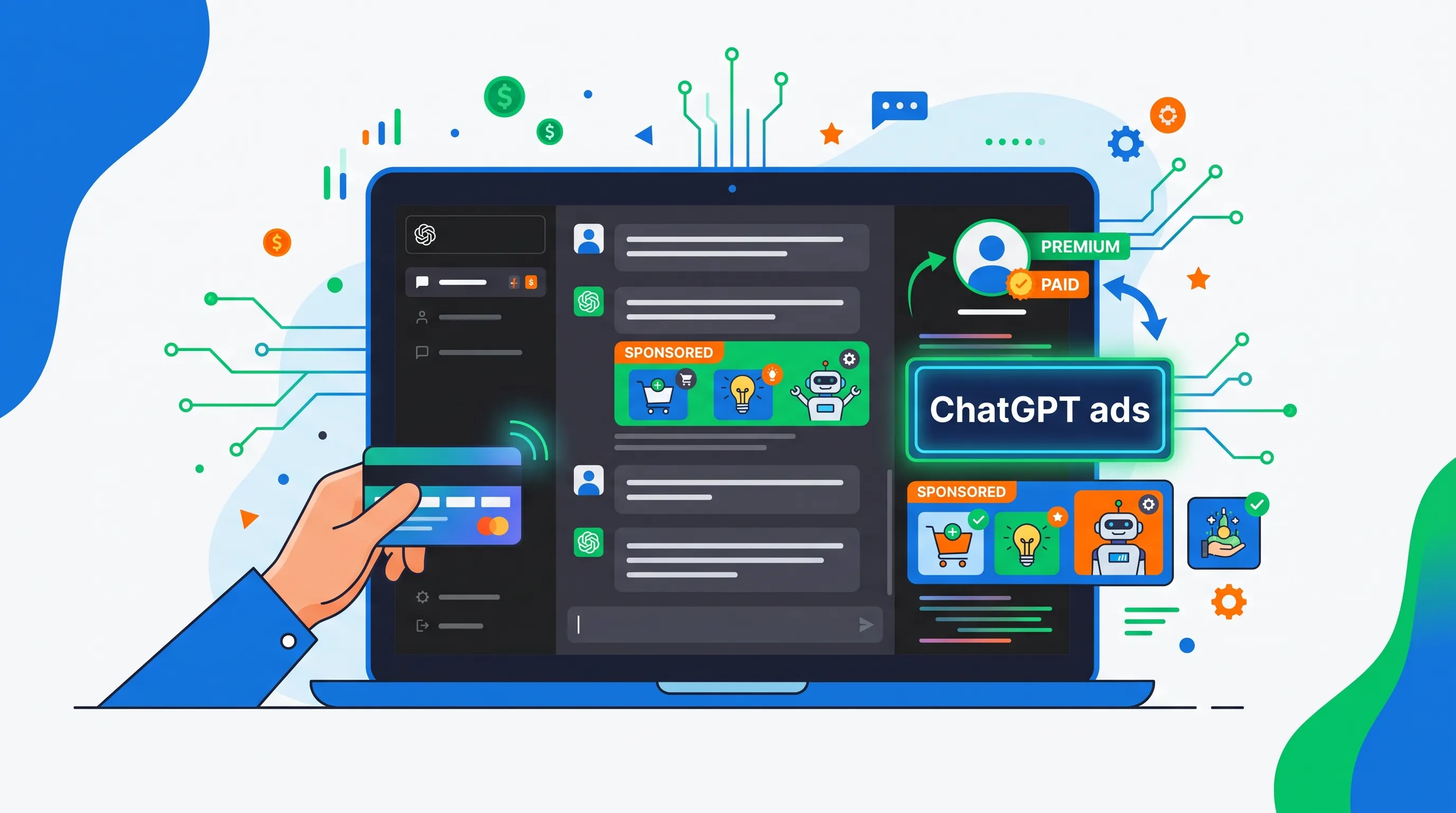
Ads show up as a separate, clearly labeled "Sponsored" card underneath ChatGPT's actual response, not blended into the answer itself. A typical ad includes a short headline, a brief description, and a small square image, sometimes with a linked product card for shopping-related questions showing price and availability. OpenAI's stated design goal is that the ad never changes or interrupts the AI's answer; it just sits visually separated below it.
What You Can Control
- Dismiss an ad when one appears, so you can see fewer of that type.
- Turn off ad personalization in your settings, so ads rely less on your location and language.
- Clear the data used for sponsored content, which resets what ad matching has learned.
- Upgrade to Plus if you want no ads at all.
Settings and trade-offs in this pilot change often. Reports disagree on what opting out costs you: some say a stricter daily message cap, while others note that text-chat limits were removed for free accounts in August. Check OpenAI's current help page for the latest rules before you decide.
What OpenAI Says About Privacy
OpenAI has stated that ads do not influence the actual answers ChatGPT gives you, and that conversation content is not shared with advertisers. Whether users take that claim at face value is a separate question, but that is the official position OpenAI has published.
Why This Is Happening Now
Running ChatGPT for hundreds of millions of free and low-cost users is expensive, and OpenAI has been open about the fact that keeping those plans running "requires significant infrastructure and ongoing investment." Ads are the company's way of subsidizing that cost without removing free access entirely. It also fits a wider pattern: after the August change that made free text chats unlimited, ads are one of the ways OpenAI pays for giving more away.
On the advertiser side, early reporting pegged premium ad placements at roughly $60 per thousand impressions, with a minimum spend commitment to participate, a signal that OpenAI is treating this as a serious, high-value ad channel rather than a minor experiment.
Should You Be Worried?
If you are on Plus or a higher plan, nothing changes for you. If you are on Free or Go and ads bother you, you have two realistic options: upgrade to Plus, or switch some of your usage to a tool that does not run ads at all.
Ad-free alternatives worth considering
Neither is a perfect ChatGPT replacement for every task, but both are solid options if an ad-free experience matters more to you than staying on one single tool. For a full list of free options, see our best free AI assistants guide, or compare the paid tiers in our Claude vs ChatGPT breakdown.
Sources
Checked on November 15, 2026:
Frequently Asked Questions
Does ChatGPT Plus have ads?
No. Plus, Pro, Business, Enterprise, and Education accounts are ad-free. Only the Free and Go plans show ads, and so far only in the United States.
Can I turn off ChatGPT ads completely?
Not on Free or Go. You can dismiss ads, turn off personalization, and clear the data used for sponsored content, but the only way to remove ads entirely is to upgrade to Plus or higher.
Do ChatGPT ads use my conversation history to target me?
Ads are matched to the topic of your current conversation and may use signals like your location and language, rather than a long-term behavioral profile. OpenAI says conversation content is not shared with advertisers, and personalization can be turned off.
Are there AI chatbots with no ads at all?
Yes. Claude has no ads on any plan at the time of writing, and Gemini shows none within the chat interface itself.
Does ChatGPT show ads outside the United States?
The ad test began in the United States, and OpenAI said it would expand gradually based on feedback. Check OpenAI's current announcement for the countries covered today.
Do ads change ChatGPT's answers?
OpenAI says no. Ads appear as a separate, labeled sponsored card below the response and are not meant to influence or interrupt the answer.
User Reviews
Be the first to review!